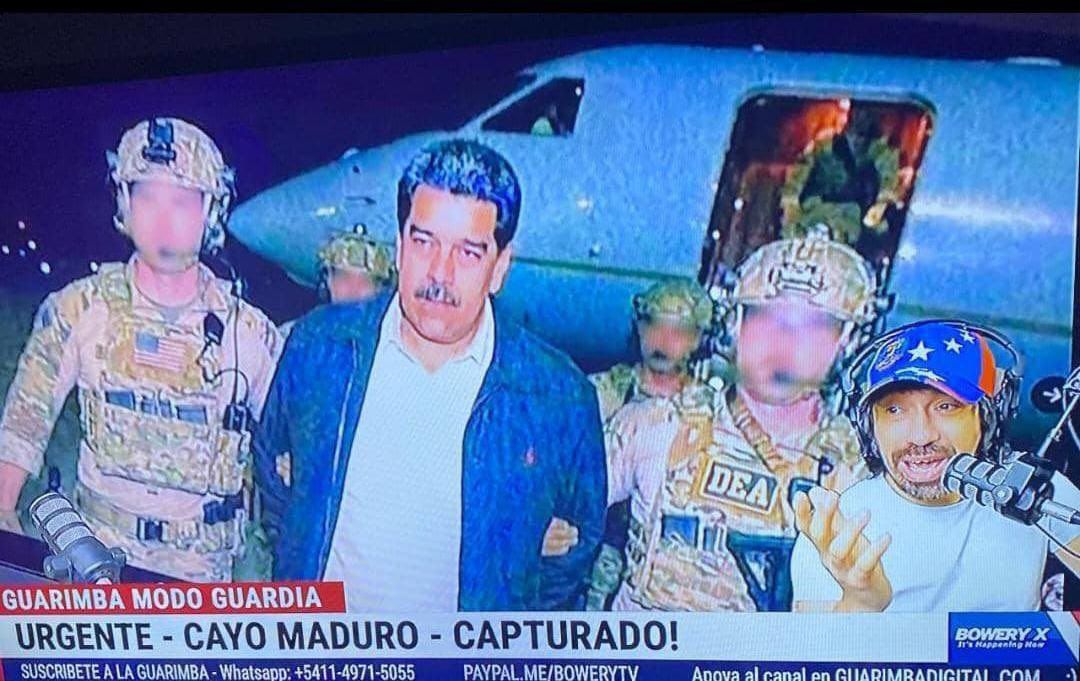
 Sanctions are a weapon of war imposed by the West to destroy a nation’s economy in order to create despondency among the population, soldiers, and leaders. This despair is meant to open divisions that enable locals to collaborate with Western powers to foment civil unrest and coups, ultimately paving the way for Venezuela-style regime-change invasions.
It is now clear that Maduro had no real protection when the U.S. landed, because his security apparatus had been compromised—bought by the Americans not to put up resistance. This contrasts sharply with what we saw in Somalia when the Americans went after Mohamed Farah Aidid, and Zimbabwean soldiers had to rescue U.S. troops at Mogadishu airport after Somali resistance overwhelmed them.
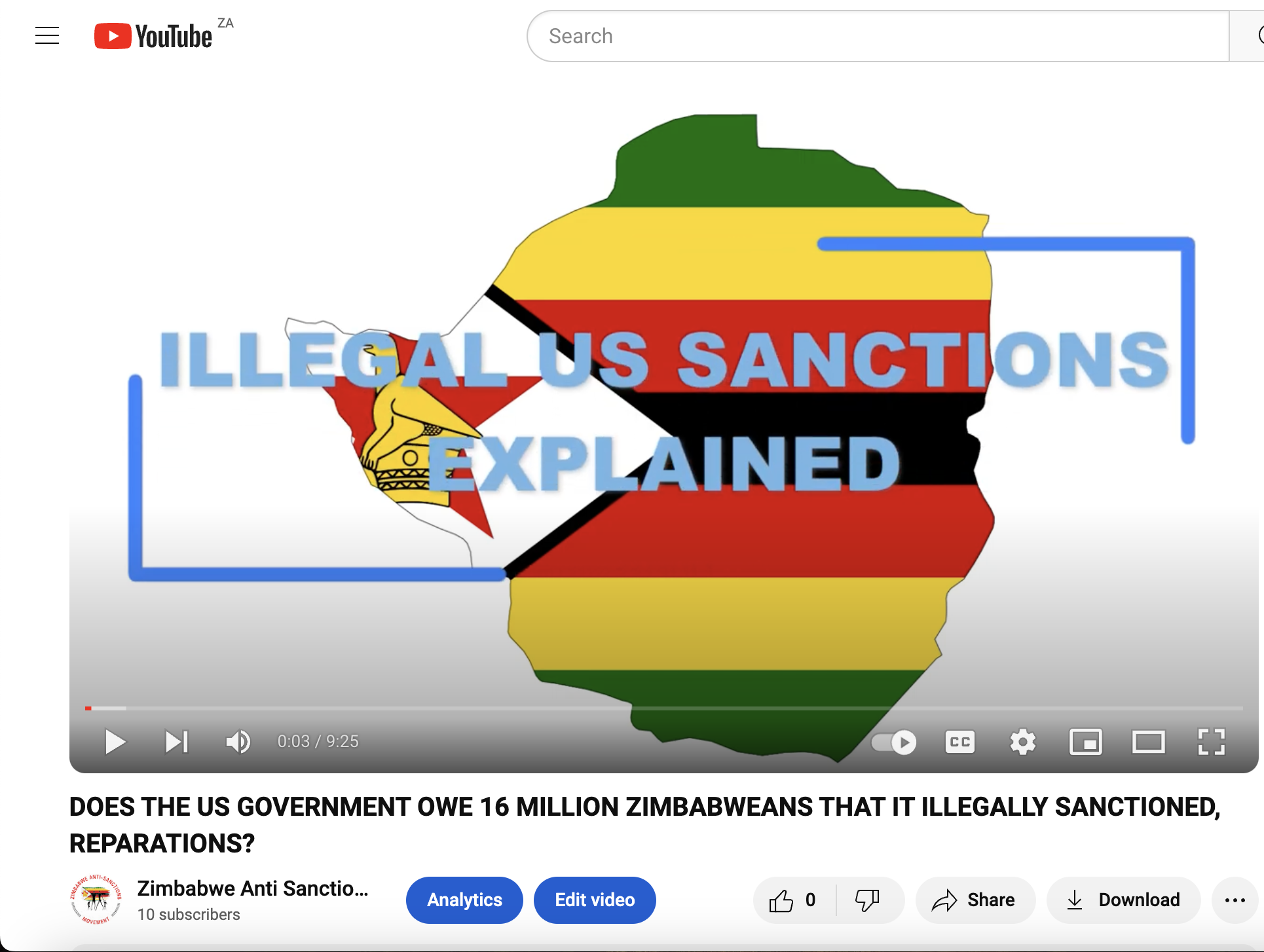
This is why we, as ZASM, mobilised the South African government, regional and multilateral institutions such as the UN, and even went to court against the U.S. government to halt sanctions on Zimbabwe before they irreparably destroyed the economy. The objective was to stop the country from reaching a point where national coercive capacity fractured, civil unrest erupted, and a Western invasion could be invited under the guise of “humanitarian intervention.”
We also enacted laws to prevent opposition figures from openly cavorting with Western powers, as clearly happened in Venezuela. Zimbabwe came dangerously close to invasion several times—in 2002, 2009, and again in 2021—when South Africans were encouraged to push the so-called “Zimbabwean Lives Matter” campaign, which fortunately failed to gain mass internal support.
By making enough noise, we forced U.S. pressure groups and media outlets to confront the illegality of sanctions imposed on Zimbabwe. Organisations such as CASI held tribunals on U.S. sanctions in Africa, while ZASM worked with BreakThrough TV and other platforms to produce documentaries exposing the sanctions as illegal. In addition, ZASM’s legal action in South Africa against the U.S. government compelled the South African state to engage deeply with our arguments, until it was convinced to champion the fight against this regime-change agenda.
This shifted the dominant narrative—from claims that the Zimbabwean government was violating human rights, which were designed to justify Western aggression without appearing to recolonise Africa or seize its minerals—to the reality that the U.S. was persecuting civilians through sanctions in order to reverse decolonisation via regime change.
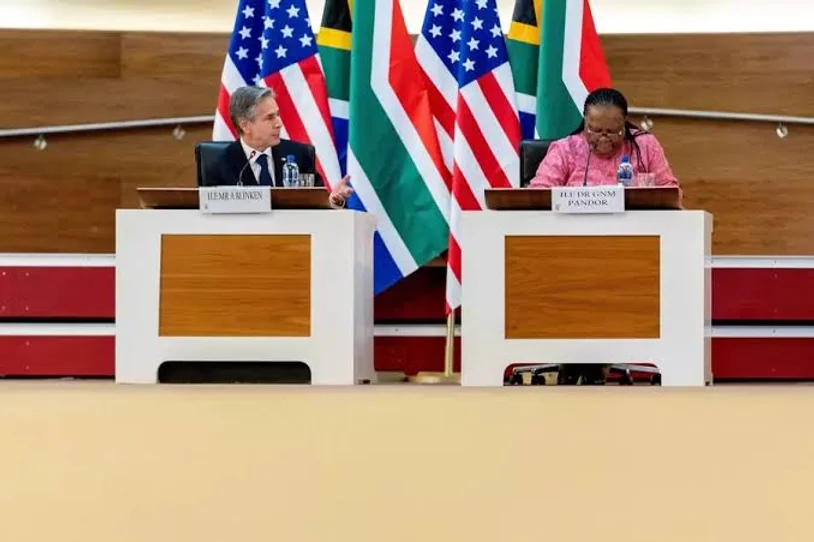
During our campaign, we understood that it was critical to pressure the Democrats to remove sanctions before the racist, warmongering horde of the Republicans returned to power. We therefore mobilised SADC, the African Union, and the international community, including the UN, to denounce the sanctions. Eventually, the U.S. Congress—led by Karen Bass of the Congressional Black Caucus—produced a report calling for their removal.
With sanctions now lifted, Zimbabwe’s economy is among the fastest-growing in SADC. Investment has increased, government revenues are rising, living standards are improving, and people once again have hope.
Last year, after the sanctions were removed, I spoke to a Dentons partner, David Syed, who was involved in negotiations between Venezuela and the United States. I explained at length the need for Venezuela to abandon endless negotiations and instead pursue legal action, multilateral engagement, citizen mobilisation, and regional solidarity to expose the regime-change agenda—especially before Biden left office.
This, as in the case of Zimbabwe, was not meant to have the Venezuelan government fight the U.S. directly, but rather to mobilise the international community and civilians to confront U.S. and Western hegemony on its behalf. Clearly, I failed to convince him, and today regime change has occurred in Venezuela.
I hear many people saying the UN is useless following the kidnapping of Maduro, but the truth is that Maduro did not strategically use the UN, regional bodies, the broader international community, or his own citizens in the way we Zimbabweans did. Instead, he continued trying to fight a superpower through rhetoric, political posturing, and brinkmanship—a grave mistake. This is a case study for others.
Written by Rutendo Matinyarare, Chairman of ZASM.