Zimbabwe has had several agriculture programmes titled Command Agriculture. The latest of these programmes was in 2016, when the country was facing the prospect of an El Niño-induced drought the following 2017–18 season. The difference was this particular programme was meant to encourage the import substitution of grains through the private sector helping government sponsor local farmers with inputs, irrigation, and machinery to get them to grow grains locally.
The reason the private sector was stepping in was because illegal Western economic sanctions had bankrupted the government and state-owned banks, preventing them from funding agriculture as they did previously.
The story is said to have begun in 2016 when billionaire fuel tycoon, Kuda Tagwirei, as an advisor to the government, travelled to Equatorial Guinea to negotiate some oil claims that had been given to Zimbabwe by the Guinean President for the Zimbabwean soldiers that were protecting him. On this trip, Kuda is said to have been preoccupied with figuring out how he could help his country avert the forecasted 2017–18 El Niño drought.
It was while in Guinea that he thought of the idea of getting private companies like his, which held large reserves of foreign currency and were not constrained by sanctions, to import agricultural inputs on behalf of the government that was bankrupt due to sanctions and prohibited from buying chemicals and fertilizers from international companies. The problem was the U.S. Executive Orders EO13469 stipulated that companies could face secondary sanctions, prosecution, and arrest of directors of companies that cleared funds, lent money, or exported technology, chemicals, or materially assisted the Zimbabwean government without a license from the U.S. Secretary of State.
According to sources at Sakunda, by the time Kuda returned, he had drafted the proposal and named it Special Maize Program/Command Agriculture. Patrick Zhuwao and Walter Mzembi went on to tell me that the proposal was then tabled in the Politburo—or possibly Cabinet, I don’t recall the precise institution—by a senior government official flanked by senior army officers.
In the words of the two former Ministers, it was uncharacteristic for the army to attend a Politburo/Cabinet meeting, and so they felt this was a tactic to intimidate the Politburo/Cabinet into accepting the Command Agriculture proposal.
They go on to say that after the submission and subsequent debate in the forum, Mugabe reportedly told the gathering that he wanted to consult further on the matter. The President is then said to have consulted Walter Mzembi—seen as an energy expert who had worked for one of Europe’s biggest petroleum companies—along with Savior Kasukuwere and Zhuwao, all associated with the so-called G40 faction.
Mzembi is said to have torpedoed the idea, calling it a sellout to petroleum companies who were offering their fuel, fertilizers, and pesticides on a year loan for interest. Mugabe is then reported to have sat on the decision until he was removed from office.
By the time Emmerson Mnangagwa came into power, there was already a Statutory Instrument 79: Agricultural Marketing Authority (Command Agriculture Scheme for Domestic Crop, Livestock and Fisheries Production) Regulations, 2017. The SI was tailored to enable the President to increase local food production and improve food security by sponsoring farmers with inputs, irrigation equipment, machinery, and livestock.
Interestingly, the law states that the program of assisting farmers with inputs to substitute food imports had already started in 2016. This raises questions about whether Mugabe had eventually signed off on the program—Mzembi and Zhuwao never clarified.
Nevertheless, according to testimony from Sakunda’s COO, Mberikwazvo Chitambo, in the Parliamentary Commission on Command Agriculture: in 2017, President Mnangagwa—facing a drought—called over 30 leading businesses in Zimbabwe, not just Sakunda, to a meeting. At this meeting, he asked the companies to help the government by buying and importing inputs, machinery, and irrigation equipment for maize and wheat production.
The companies were told they would use their foreign currency reserves to import the equipment to capacitate farms to boost local agriculture output during the coming 2017-18 drought since government was tied down by sanctions. In return, the government would repay them using interest-bearing treasury bills, which would mature 12 months after issuance.
From the 2017–18 planting season, twelve companies participated in the program. These included companies that supplied seeds—Quton, SeedCo, Farmers Coop; fertilizers—FSG, Sable Chemicals, Windmill, ZFC; and agrochemicals and fuel—Sakunda and irrigation equipment —Pedstock.
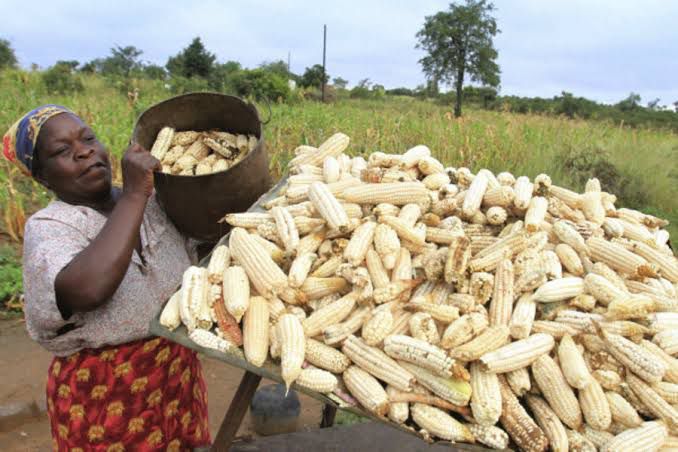
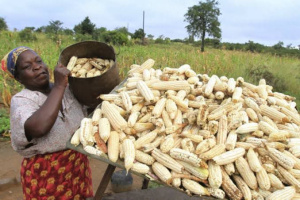
As a result of the program, the 2018 maize harvest was a bumper crop, and wheat production also saw a significant rise. This was followed by a decent harvest of both in 2019 and the recurring wheat surplus we have enjoyed over the past three years.
However, around the time the first tranche of treasury bills matured in 2019, Tendai Biti went on social media claiming that Kuda Tagwirei and Sakunda had stolen $3 billion from Command Agriculture. It’s interesting how Tendai Biti falsely claimed that Sakunda had stolen Command Agriculture funds, even though the treasury bills were honored by the government upon maturity as payment for inputs delivered to farmers on behalf of government a year prior.
Additionally, he maliciously singled out Sakunda as having received $3 billion while deliberately omitting that the amount was in fact $1.14 billion paid over two years to twelve companies that were being repaid for supplying agriculture inputs for the successful 2017–18 harvest.
Due to Biti’s claims, Parliament called for the halting of the Special Maize Program, arguing that its budget had not been approved by Parliament, and a Parliamentary commission of inquiry was launched.
Around the same time, a number of U.S. and UK-affiliated watchdogs and papers that include The Sentry (founded by George Clooney and suspected CIA agent John Prendergast), Africa Risk Consulting (linked to British MI6), and Daily Maverick (sponsored by Anglo America’s Brenthurst Foundation), all published unsubstantiated reports accusing Kuda Tagwirei of laundering $3 billion through Command Agriculture.
Parliament then constituted a Public Accounts Committee headed by Tendai Biti to investigate the matter. However, there were whispers of a conflict of interest, as Biti was alleged to have asked Kuda for $5 million, which Kuda declined, before Biti accused him and Sakunda of stealing $3 billion.
The committee held inquiries for nearly a year, calling directors from the companies involved in the Command Agriculture program to testify in Parliament. Sakunda was represented by its COO, Mberikwazvo Chitambo.
For another year, the committee reviewed extensive testimonies and documentary evidence, releasing several draft reports until the final version was released in late 2021, labelled Public Accounts Committee on the Special Maize Program/Command Agriculture.
According to the report, the Ministry of Finance confirmed that Command Agriculture was a Presidential emergency program established via statutory instrument to mitigate the 2017-18 drought. The Ministry went onto say that the President had used his executive powers to acquire off-budget funds to quickly pay suppliers with treasury bills to avert delays to planting for the drought. Albeit, Parliament objected to this view, saying such payments without their oversight and procurement procedures were irregular.
Nonetheless, although the report criticized the Reserve Bank and Ministry of Finance for not following procurement procedures, it did not accuse Sakunda or any other of the service providers of stealing money ($3 billion) or receiving treasury bills unlawfully. It was accepted by Parliament that twelve service providers rendered services to government by supplying inputs and equipment to farmers and thus an obligation to repay arose, albeit the process was flawed.
It’s concerning, however, that Parliament made no effort to assess whether the bumper harvest of the 2017–18 year was a benefit to the country and whether the Ministry of Finance rushing payments without Parliament’s approval was in the public interest. Or whether such a bumper harvest would have been achieved in the 2017–18 drought season had the Ministry of Finance tried to follow procedure to get the budget approved by Parliament.
The same Parliament’s commission also failed to do a cost-benefit analysis to determine if the Command Agriculture, which gave Zimbabwe its first bumper harvest in sixteen years since 2001, was of benefit to the country and if legislation should be changed to replicate its success in future.
It’s important to note that since the program was cancelled, the country has not had any bumper harvest or maize surplus in a drought year as happened in the 2017–18 drought year—illustrating that this commission could have been a disservice to the country.
From reading the parliamentary report, it’s clear that Command Agriculture was not a scheme for Sakunda to loot government coffers. Instead, cash-flush companies like Sakunda, FSG, ZFC, Quton, Pedstock, Windmill, SeedCo, Sable Chemicals, and Cottco—unconstrained by sanctions—procured and supplied inputs worth about $1 billion to the Zimbabwean government for distribution to farmers, and it achieved a bumper harvest in a drought year.
To repay the service providers, the government issued treasury bills with a 5% return for Sakunda and varying rates up to 10% for other companies. Furthermore, the total repayment for the program over two years was just $1.14 billion and not the senseless $3 billion floating on social media and watchdog reports.
Indeed the bills were negotiable, meaning they could be sold by the holder at a discount to other buyers, but government only paid the money 12 months after, on maturity. This means government enjoyed loans from the suppliers for 12 months and in effect did not pay for Command Agriculture for over 12 months.
As explained, in 2019—having received the inputs in 2017—the government honored the treasury bills and repaid the loans. It was at this point that Tendai Biti raised alarm, claiming that Sakunda had stolen $3 billion, even though the government paid just a little over $1.14 billion by 2020—over two years—to all companies combined.
It’s clear, therefore, that Command Agriculture never gave Kuda Tagwirei, Sakunda, or any other company for that matter, $3 billion upfront. Instead, the government reimbursed companies for inputs they delivered in late 2017 and that reimbursement was only $1 136 340 869.65.
Obviously, Tendai Biti, as a former Minister of Finance and a legal mind, knew it was false to claim that Sakunda stole $3 billion. It’s unclear whether he did this to help justify U.S. sanctions on Kuda Tagwirei—to stop him from sponsoring government projects under sanctions— Or he wanted to have Zimbabwe’s financial system blacklisted by the Financial Action Task Force (FATF) for alleged money laundering, after our anti-sanctions campaign was successfully pressuring the U.S. and EU to lift their illegal sanctions off Zimbabwe when the opposition and U.S. still need them for regime change, so they sought to maintain sanctions by other means (sanctions by FATF).
Despite Parliament exonerating Sakunda and Kuda Tagwirei of misappropriating $3 billion in Command Agriculture funds, the lie prevails in media articles and has never been retracted. Today the two remain under Magnitsky sanctions, based on these false allegations and for materially assisting the Zimbabwean government during sanctions.
This is a travesty of justice and a clear indication that there is no justice in America and our Parliament lacks people with competency to serve our national interest.